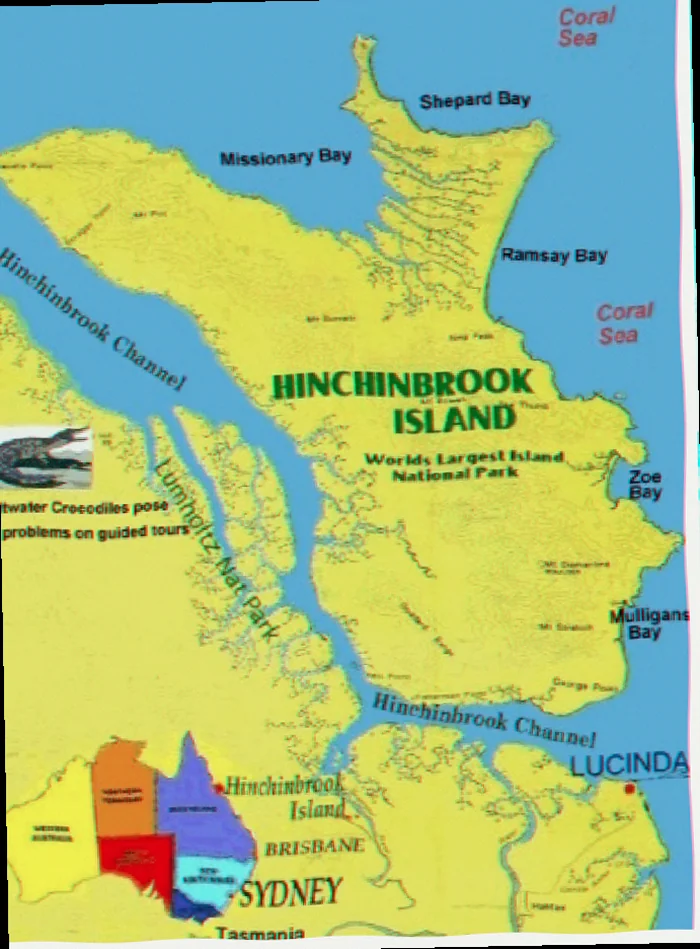
Beneath the shimmering turquoise waters of Queensland's iconic Hinchinbrook Channel lies a hidden world of immense power, a lush underwater meadow often mistaken for simple seaweed. Yet, these vibrant seagrass ecosystems are not only true flowering plants, but also one of Australia's most vital, unsung heroes, silently working to purify our oceans, feed our marine giants, and store vast amounts of carbon. Far from being mere underwater greenery, these meadows are the beating heart of one of Australia's most diverse marine environments, a crucial link in the chain of life that sustains countless species and provides essential services to our planet.
Natural History Overview
| Category | Information |
|---|
| Scientific name (dominant species) | Thalassia hemprichii |
| Common name variants | Turtle grass, Dugong grass, Strap seagrass (for Cymodocea serrulata) |
| First described (year) | 1832 by C.G. Ehrenberg (as Schizotheca hemprichii) |
| Size and weight | Leaves typically 10-40 cm long, 5-12 mm wide. Rhizomes spread horizontally up to 30 cm deep. Biomass can exceed 1 kg dry weight per square meter in dense beds. |
| Longevity record | Individual plants can live for decades; clonal meadows can persist for hundreds to thousands of years. |
What Makes Hinchinbrook channel seagrass ecosystems Extraordinary
What truly sets seagrass ecosystems in the Hinchinbrook Channel apart, surprising even seasoned biology students, is their extraordinary dual role as both an advanced flowering plant and a foundational marine ecosystem engineer. Unlike algae or seaweeds, seagrasses are true vascular plants, complete with roots, stems (rhizomes), leaves, and even flowers that produce seeds - all while living entirely submerged in saltwater. They photosynthesise, draw nutrients from the sediment, and release oxygen, much like terrestrial plants.
In the dynamic Hinchinbrook Channel, where freshwater runoff from the mainland meets tidal saltwater, seagrasses exhibit remarkable physiological adaptations. They must cope with fluctuating salinity, strong currents, and periods of both inundation and exposure during extreme low tides. Their robust rhizome systems not only anchor them firmly in soft sediments, preventing erosion, but also create a complex, oxygenated substrate that supports a myriad of microscopic life. This intricate root network acts as a natural water filter, trapping sediments and absorbing excess nutrients, thereby improving water clarity - a vital service for coral reefs and other light-dependent organisms found nearby. Their ability to thrive in such a transitional, often turbulent, environment while performing such complex ecological functions is a testament to their evolutionary success.
Aboriginal and Torres Strait Islander Perspectives
For the Traditional Owners of the Hinchinbrook region, including the Bandjin and Girramay people, the health of the seagrass meadows has been intrinsically linked to cultural survival and well-being for millennia. Seagrass is not merely a plant; it is the lifeblood of the Channel, sustaining culturally significant species like dugongs (Yuwarr) and green sea turtles (Wunyami). These marine mammals and reptiles, which graze extensively on seagrass, are vital food sources and hold deep totemic significance, featuring prominently in lore, stories, and traditional ceremonies.
Traditional ecological knowledge, passed down through generations, has provided the Bandjin and Girramay people with a profound understanding of the seagrass ecosystem. They observed the intricate connections between tides, water quality, and the abundance of seagrass, which in turn influenced the movements and health of dugongs and turtles. This knowledge informed sustainable hunting practices and resource management, ensuring the long-term health of both the environment and their communities. The cycles of the seagrass, its growth, and its role in supporting other life forms are deeply embedded in their cultural fabric, highlighting a respectful and reciprocal relationship with the land and sea.
Recent Scientific Discoveries (last 20 years)
- Discovery 1 (2021): The World's Largest Plant is a Seagrass Clone. While not in Hinchinbrook, a groundbreaking study published in Proceedings of the Royal Society B identified a single clone of the seagrass Posidonia australis stretching over 180 kilometres in Shark Bay, Western Australia. This colossal plant, estimated to be at least 4,500 years old, was found to be genetically identical, highlighting the incredible capacity for resilience and longevity within seagrass species, suggesting similar ancient and expansive clonal systems could exist elsewhere, including in the diverse Hinchinbrook meadows.
- Discovery 2 (2012): Seagrass as a Natural Antibiotic. Research published in Science demonstrated that seagrass meadows significantly reduce bacterial pathogens and disease risk for corals and humans. Specifically, in areas with healthy seagrass beds, the incidence of disease in juvenile corals was found to be 50% lower, and the presence of enterococcus bacteria (an indicator of faecal contamination) was also substantially reduced. This unveiled a critical, previously underappreciated ecosystem service of seagrass in maintaining marine and human health.
- Ongoing research: Blue Carbon Quantification and Restoration. Scientists are continuously refining methods to quantify the "blue carbon" stored in Hinchinbrook's seagrass meadows. Studies are exploring the specific rates at which different seagrass species sequester carbon, the depth and stability of these carbon stores, and the potential for seagrass restoration to contribute to climate change mitigation strategies. Research also focuses on understanding the genetic diversity of Hinchinbrook's seagrasses to identify strains more resilient to climate change impacts like marine heatwaves and cyclones.
Life History and Ecology
- Diet: Seagrasses produce their own food through photosynthesis, converting sunlight into energy. They absorb nutrients like nitrogen and phosphorus from the surrounding seawater and sediments through their roots and leaves.
- Habitat: In the Hinchinbrook Channel, seagrasses thrive in sheltered, shallow coastal waters, estuaries, and intertidal zones with soft, sandy, or muddy substrates. They are found from just below the low-tide mark down to several metres deep, depending on water clarity.
- Breeding: Seagrasses reproduce both sexually and asexually. They produce small, inconspicuous flowers underwater, which are pollinated by water currents (hydrophilous pollination). Seeds are then dispersed by currents, fish, or dugongs. Asexually, they spread extensively via their creeping rhiz