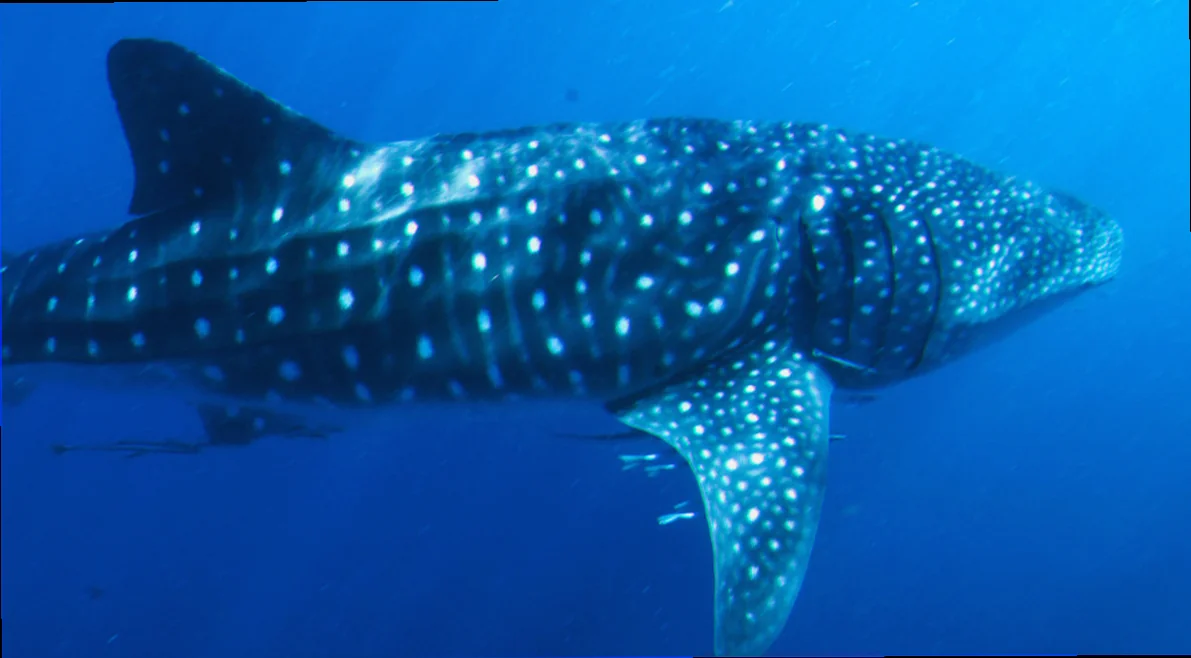
Ecological significance: Whale sharks (Rhincodon typus) are filter feeders, occupying a crucial trophic level by consuming vast quantities of plankton, including zooplankton and small fish. Their presence helps regulate these populations within the Great Barrier Reef's complex food web. The disappearance of whale sharks would likely lead to an increase in their prey species, potentially altering the delicate balance of planktonic communities and impacting the food available for other filter feeders and larval fish within this iconic Australian ecosystem.
Species Profile
| Attribute | Data |
|---|---|
| Scientific name | Rhincodon typus Smith, 1828 |
| Trophic level | Filter feeder (consuming plankton and small fish) |
| Population estimate | Global estimates are difficult to ascertain due to their wide-ranging nature and slow reproduction. However, in the Western Australian Ningaloo Reef region, a key aggregation site, population estimates have varied, with some studies suggesting a few thousand individuals utilize the area seasonally. For the Great Barrier Reef specifically, robust population estimates are lacking, but it is considered a migratory destination for individuals from wider Indo-Pacific populations. |
| Native range | Tropical and warm-temperate oceans worldwide, including the Great Barrier Reef region of Queensland, Australia, and extending to the Indo-Pacific and Atlantic Oceans. |
| EPBC Act status | Listed as Vulnerable |
Position in the Food Web
- Prey species: Whale sharks are filter feeders. They primarily consume plankton, including copepods, krill, and other small crustaceans, as well as small schooling fish like anchovies and sardines. They achieve this by swimming with their mouths open, drawing in large volumes of water and filtering out food using their gill rakers.
- Predators: Adult whale sharks have few natural predators due to their immense size. However, juvenile whale sharks are more vulnerable and have been preyed upon by large predatory sharks, such as the Great White Shark (Carcharodon carcharias). Injuries observed on whale sharks, such as bite marks, are often attributed to these apex predators.
- Competitors: As filter feeders, whale sharks compete with other planktivorous organisms in the Great Barrier Reef. This includes various species of filter-feeding fish, such as whale-feeding minke whales during their migration, and potentially large schools of smaller fish that consume similar planktonic resources.
- Symbiotic partners: Whale sharks are well-known for their association with remoras (family Echeneidae). These fish attach themselves to the whale shark's body, benefiting from a free ride and scraps of food dislodged during the shark's feeding. This is a commensalistic relationship, where the remora benefits and the whale shark is largely unaffected.
- Keystone role: While not typically classified as a keystone species in the traditional sense of having a disproportionately large impact on ecosystem structure relative to its abundance, whale sharks can be considered an umbrella species. Their conservation requires the protection of large areas of the ocean, including critical feeding and migratory grounds, which indirectly benefits numerous other species within the Great Barrier Reef ecosystem.
Habitat Requirements and Microhabitat Use
Whale sharks in the Great Barrier Reef region are typically found in warm, tropical waters, favouring pelagic environments over continental shelves and oceanic islands. They are often observed in areas with high plankton productivity, which can be influenced by ocean currents, upwelling zones, and nutrient runoff. Specific bioregions like the Coral Sea Province and the various marine park zones within the Great Barrier Reef Marine Park are critical for their seasonal aggregations. They can be found in both inshore and offshore waters, with a preference for depths ranging from the surface to a few hundred metres, often congregating in areas where prey is abundant, such as near reefs or oceanic seamounts.
Reproductive Strategy and Population Dynamics
Whale sharks exhibit a K-selected reproductive strategy. They are believed to have a long lifespan, potentially exceeding 70 years, and reproduce slowly. Mating is thought to occur in warmer waters, and pregnant females have been documented, indicating that they give birth to live young. Juvenile survival rates are likely low, as with many large marine species, and are impacted by predation and resource availability. Factors limiting population growth include their late maturity, infrequent reproduction, and susceptibility to various anthropogenic threats.
Threats and Vulnerability Analysis
- Introduced species pressure: While direct impacts from introduced species on whale sharks are minimal, indirect effects can occur through alterations to their food web. For example, invasive species that disrupt planktonic communities could reduce food availability for whale sharks.
- Land-use change: Agricultural and urban development in coastal Queensland can lead to increased sediment and nutrient runoff into the Great Barrier Reef lagoon. This can alter water quality, promote algal blooms, and potentially impact the abundance and distribution of plankton, thereby affecting whale shark feeding grounds.
- Climate projections: By 2050, rising sea surface temperatures associated with climate change could lead to shifts in plankton distribution and abundance, potentially affecting the predictability of whale shark feeding aggregations. Ocean acidification may also impact the calcifying organisms within the plankton, with cascading effects on the food web. Increased intensity of tropical cyclones could also pose a direct threat to aggregations and disrupt their migratory patterns.
- Disease: While specific diseases affecting whale sharks in Australian waters are not widely documented, they are susceptible to various parasites and opportunistic infections, particularly if stressed by other environmental factors or injury.
Recovery Actions and Research Gaps
Current recovery actions for whale sharks in the Great Barrier Reef region primarily focus on management and protection within the Great Barrier Reef Marine Park, including regulations on vessel speed and approach distances to minimise disturbance. Research is ongoing into their migratory patterns, feeding ecology, and population genetics. A critical data gap that researchers still need to fill is a comprehensive understanding of their reproductive biology and the location of their pupping grounds, which is essential for effective long-term conservation planning.
Ecological FAQ
Why is Whale shark conservation efforts great barrier reef important to its ecosystem?
Whale sharks are important to the Great Barrier Reef ecosystem because of their role as large-scale filter feeders. By consuming vast quantities of plankton and small fish, they help regulate the populations of these organisms, preventing imbalances that could affect other parts of the food web. Their migratory movements also contribute to nutrient cycling across different marine environments.
How has the Whale shark conservation efforts great barrier reef population changed over the last 50 years?
Quantifying population changes for whale sharks in the Great Barrier Reef over the last 50 years is challenging due to their migratory nature and the difficulty in conducting comprehensive surveys. However, global trends suggest that populations have declined due to historical hunting and ongoing threats like bycatch and habitat degradation. While specific long-term data for the Great Barrier Reef is scarce, it is likely experiencing similar pressures, with potential fluctuations in the number of individuals observed seasonally due to changes in prey availability and migratory routes.
What can individuals do to support Whale shark conservation efforts great barrier reef conservation?
Individuals can support whale shark conservation by making responsible tourism choices when visiting areas where whale sharks are present, adhering to strict guidelines regarding vessel operation and wildlife interaction to minimise disturbance. Reducing plastic consumption and proper waste disposal is also crucial, as plastic pollution poses a significant threat to marine life, including whale sharks through entanglement and ingestion. Supporting organisations involved in marine conservation research and advocacy through donations or volunteering can also contribute significantly to their protection.