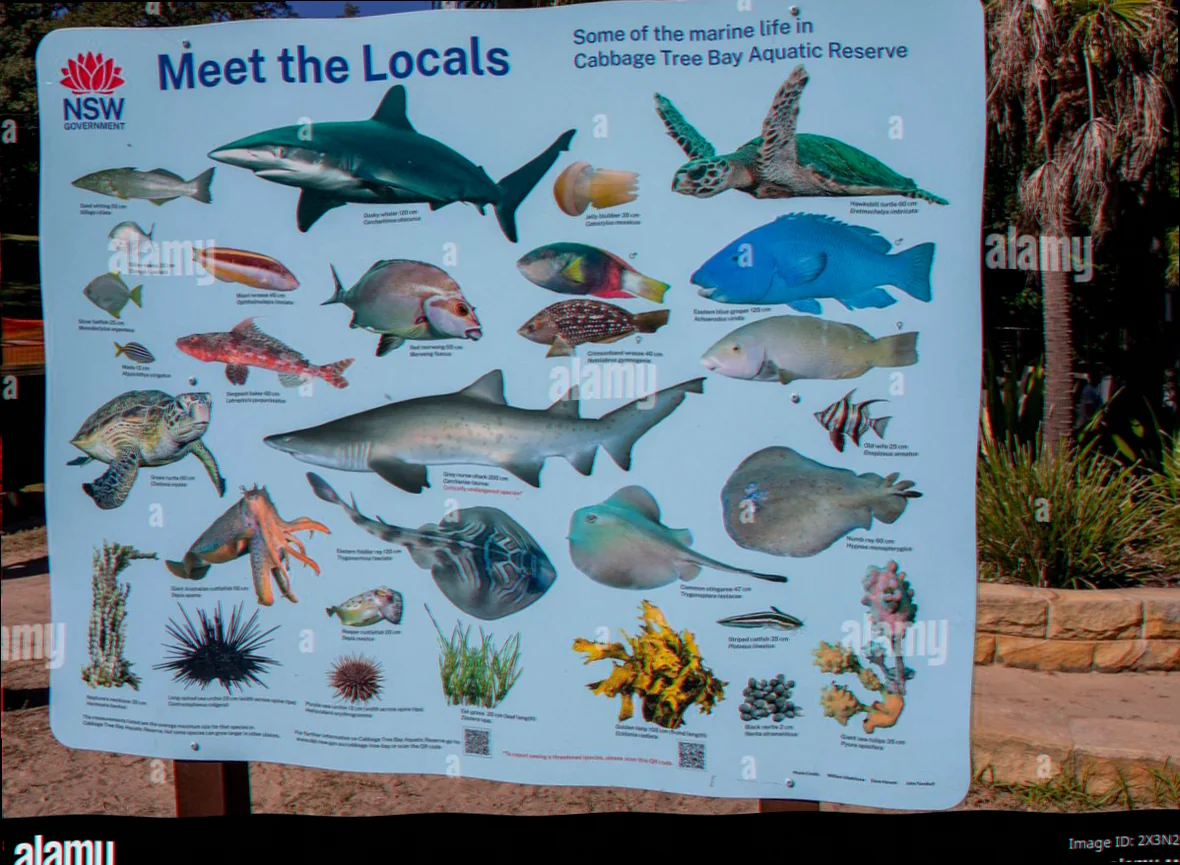
Ecological significance: The Eastern Blue Groper (Achoerodus viridis) plays a vital role within the Cabbage Tree Bay marine ecosystem as a prominent benthic omnivore. Occupying a meso-predator trophic level, it effectively regulates populations of sea urchins, crabs, and other invertebrates, thereby influencing algal growth and maintaining the structural integrity of rocky reef habitats. Its presence is indicative of a healthy, balanced temperate marine environment, and its removal could lead to trophic cascades, such as increased urchin barrens and reduced biodiversity.
Species Profile
| Attribute | Data |
|---|---|
| Scientific name | Achoerodus viridis (Steindachner, 1866) |
| Trophic level | Omnivore (primarily benthic invertebrates, some algae) |
| Population estimate | Densities of A. viridis within marine protected areas like Cabbage Tree Bay are significantly higher, with a study by Turnbull et al. (2014) finding mean densities in protected areas to be over double those in fished areas, demonstrating the effectiveness of protection. Specific local estimates for Cabbage Tree Bay are not routinely published at a fine scale but are considered robust. |
| Native range | Eastern Australia, from Southern Queensland down to Tasmania, including New South Wales and Victoria. |
| EPBC Act status | Not listed |
Position in the Food Web
- Prey species: The Eastern Blue Groper is an opportunistic feeder, primarily consuming benthic invertebrates. Its strong, crushing jaws are adapted for tackling hard-shelled organisms such as crabs (e.g., Ozius truncatus, Plagusia chabrus), molluscs (e.g., gastropods, bivalves), and sea urchins (e.g., Centrostephanus rodgersii). They employ a foraging strategy of actively searching rock crevices and under ledges, using their robust snout to dislodge prey. They are also known to consume some macroalgae.
- Predators: While adult Eastern Blue Gropers are large and robust, offering considerable protection, they can fall prey to larger apex predators. Specific predators include larger shark species such as the Grey Nurse Shark (Carcharias taurus) or various species of whaler sharks (Carcharhinus spp.). Historically, humans were a significant predator, particularly through spearfishing and line fishing, leading to population declines before the establishment of marine protected areas and legal protections. Juvenile gropers are vulnerable to a wider range of reef piscivores.
- Competitors: In its benthic foraging niche, A. viridis can compete with other large bottom-dwelling fish species that consume similar prey. This includes other large wrasse species, some snapper species (Pagrus auratus), and larger stingrays (Dasyatis brevicaudata) which forage for crustaceans and molluscs within the rocky reef and adjacent sand habitats. Competition primarily revolves around access to preferred feeding grounds and specific prey items.
- Symbiotic partners: The Eastern Blue Groper frequently engages in a mutualistic relationship with various cleaner fish species, most notably the Eastern Cleaner Wrasse (Labroides dimidiatus). These small wrasse set up "cleaning stations" where gropers and other reef fish present themselves to have external parasites, dead skin, and mucus removed. The cleaner wrasse gains a reliable food source, while the groper benefits from improved health and hygiene, illustrating a classic example of mutualism on the reef.
- Keystone role: While not a classic 'keystone species' in the sense of dramatically altering the physical structure of the ecosystem upon its removal, the Eastern Blue Groper serves as a crucial indicator species for the health of temperate rocky reef ecosystems. Its robust populations, particularly in protected areas like Cabbage Tree Bay, signify a balanced food web and minimal anthropogenic disturbance. As a significant consumer of sea urchins, it also indirectly contributes to the health of kelp forests by limiting urchin barrens, although its role here is not as dramatic as some other urchin predators.
Habitat Requirements and Microhabitat Use
The Eastern Blue Groper is intrinsically linked to complex temperate rocky reef environments, which are abundant within Cabbage Tree Bay Aquatic Reserve. These habitats provide essential shelter, foraging grounds, and breeding sites. Specifically, they favour areas characterised by dense macroalgal growth, predominantly kelp forests dominated by species like Ecklonia radiata, which offer refuge and support a rich invertebrate community. They also utilise rocky ledges, caves, and crevices for protection from predators and as resting sites. Cabbage Tree Bay, part of the broader NSW rocky reef bioregion, exemplifies their preferred habitat, featuring extensive intertidal and subtidal rocky platforms, submerged boulders, and interspersed sandy patches. Juveniles often utilise shallower, more sheltered rock pools and seagrass beds (e.g., Posidonia australis or Zostera capricorni) for protection from predation before moving to deeper reef structures as they mature. Their home range can be relatively small, often remaining within a specific section of reef, especially for large adults.
Reproductive Strategy and Population Dynamics
The Eastern Blue Groper exhibits a K-selected reproductive strategy, characterised by a relatively long lifespan (up to 30 years), slow growth rates, and delayed sexual maturity (around 3-5 years for females, 5-8 years for males). They are broadcast spawners, releasing eggs and sperm into the water column for external fertilisation. Spawning typically occurs during late winter and spring, triggered by rising water temperatures and potentially photoperiod changes. Specific breeding aggregations have been observed in certain areas, though their precise triggers and locations require further study. Juvenile survival rates are likely low due to predation by a wide array of reef fish, although the sheer number of eggs released helps compensate for this. Population growth is primarily limited by factors such as habitat availability and quality, historical fishing pressure which disproportionately removed larger, more reproductively mature individuals, and natural predation on juveniles. The long maturation period makes them particularly vulnerable to overfishing, as populations take a long time to recover once depleted.
Threats and Vulnerability Analysis
- Introduced species pressure: While direct predation or competition from introduced species is not a primary threat for the Eastern Blue Groper, general marine pest incursions (e.g., Japanese Seaweed Undaria pinnatifida, European Green Crab Carcinus maenas) can indirectly impact their habitat by altering macroalgal communities or competing with their prey species. Marine debris, much of which is introduced by human activity, poses an entanglement and ingestion risk.
- Land-use change: Coastal urbanisation and development along the New South Wales coastline lead to increased runoff from land-based sources, introducing sediments, nutrients, and pollutants into the marine environment. This can degrade rocky reef habitats, reduce water quality, and impact macroalgal growth and invertebrate populations that the groper relies upon. Dredging and port expansions can also directly destroy or alter essential reef structures.
- Climate projections: Ocean warming is a significant threat; projections indicate a rise in sea surface temperatures by 2050, potentially leading to thermal stress, shifts in prey distribution, and changes in macroalgal communities (e.g., increased frequency of kelp forest diebacks). Ocean acidification, caused by increased CO2 absorption, will particularly impact the groper's prey by making it harder for molluscs and crustaceans to form and maintain their shells, potentially reducing food availability and growth rates.
- Disease: Eastern Blue Gropers are generally robust, but like all fish, can be susceptible to various parasites and pathogens, particularly if stressed by environmental factors like pollution or extreme temperatures. While no widespread disease outbreaks specifically threatening A. viridis populations have been identified, localised infections, often manifesting as external lesions